


The Billion-Dollar Bet: Big Tech's AI Spending Race
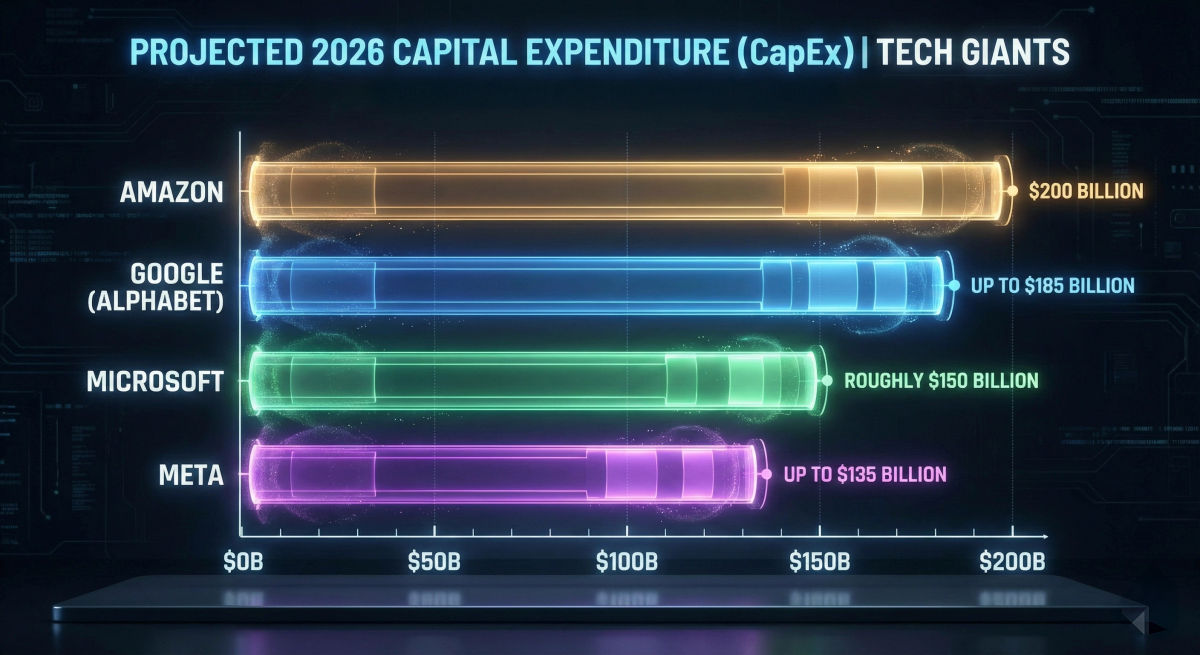
The world's largest technology companies are doubling down on AI infrastructure, committing hundreds of billions of dollars to secure their market positions. This massive financial outlay reflects a deep conviction that the demand for AI computation is only just beginning, a key driver of current AI industry growth.
These investments are primarily directed toward building data centers, acquiring GPUs, and funding research and development. The scale of these commitments suggests a long-term strategic focus that will shape the technological landscape for years to come.
Company | Projected 2026 Capital Expenditure (CapEx) |
|---|---|
Amazon | $200 Billion |
Google (Alphabet) | Up to $185 Billion |
Microsoft | Roughly $150 Billion |
Meta | Up to $135 Billion |
Google's Monumental AI Scale and Key Partnerships
Alphabet's recent earnings report highlights the tangible results of its AI investment. The company's first-party models now process over 10 billion tokens per minute through direct API usage, a 52-fold increase from the previous year. The Gemini App has also surpassed 750 million monthly active users, demonstrating widespread adoption.
A significant, though quietly handled, development is Apple's selection of Google as its preferred cloud provider. This multi-year deal will involve building the next generation of Apple Foundation Models on Google's Gemini, including a major overhaul of Siri. This partnership solidifies Google's role as a core infrastructure provider for the next wave of consumer AI.
The Economics and Future of AI Development
While investment soars, the underlying economics of AI models remain complex. An analysis suggests OpenAI desperately needs cash due to a lack of economies of scale. Microsoft's multi-billion-dollar investment may have been crucial for its survival, effectively subsidizing its services.
According to one report, OpenAI may have been charging subscribers only around 25% of the actual operational costs. This highlights the immense capital required to operate at the frontier of AI research and the challenges of building a sustainable business model.
A major trend shaping the future is recursive self-improvement, where AI models assist in creating their own successors. Both OpenAI and Anthropic have confirmed their latest models, GPT-5.3-Codex and Claude, were involved in their own development. This automation of AI research is expected to create a step-change in the rate of progress, further accelerating AI industry growth.
This trend is complemented by a vision for new interfaces, with ElevenLabs CEO Mati Staniszewski claiming that voice is poised to become the primary way humans interact with AI, surpassing traditional text and screen-based methods.