


OpenAI and Jony Ive's First AI Hardware Product Revealed
The first OpenAI Jony Ive device is reportedly a smart speaker priced between $200 and $300, set to ship by early 2027. According to sources, the device will feature a built-in camera and facial recognition capabilities, potentially for making purchases. This hardware project, born from OpenAI's $6.5 billion acquisition of Ive's startup Io Products, is being developed by a team of over 200 people, including many Apple veterans.
The speaker's camera is intended to observe its surroundings and provide proactive assistance to users. While the smart speaker is the initial focus, the team is also planning to develop AI-powered smart glasses, though they are not expected to enter production until at least 2028. This move signals OpenAI's ambition to expand beyond software and create a physical presence in users' homes, a direct challenge to the established ecosystems of Amazon's Alexa and Apple's Siri.
This initiative is not isolated. Apple is also reportedly accelerating its own development of AI-centric hardware. Projects include AI smart glasses designed to rival Meta's Ray-Bans, a wearable pendant, and AI-enhanced AirPods, all centered around a more capable, camera-enabled Siri. The race to define the next generation of AI hardware is clearly heating up.
Unofficial Design Concepts Emerge
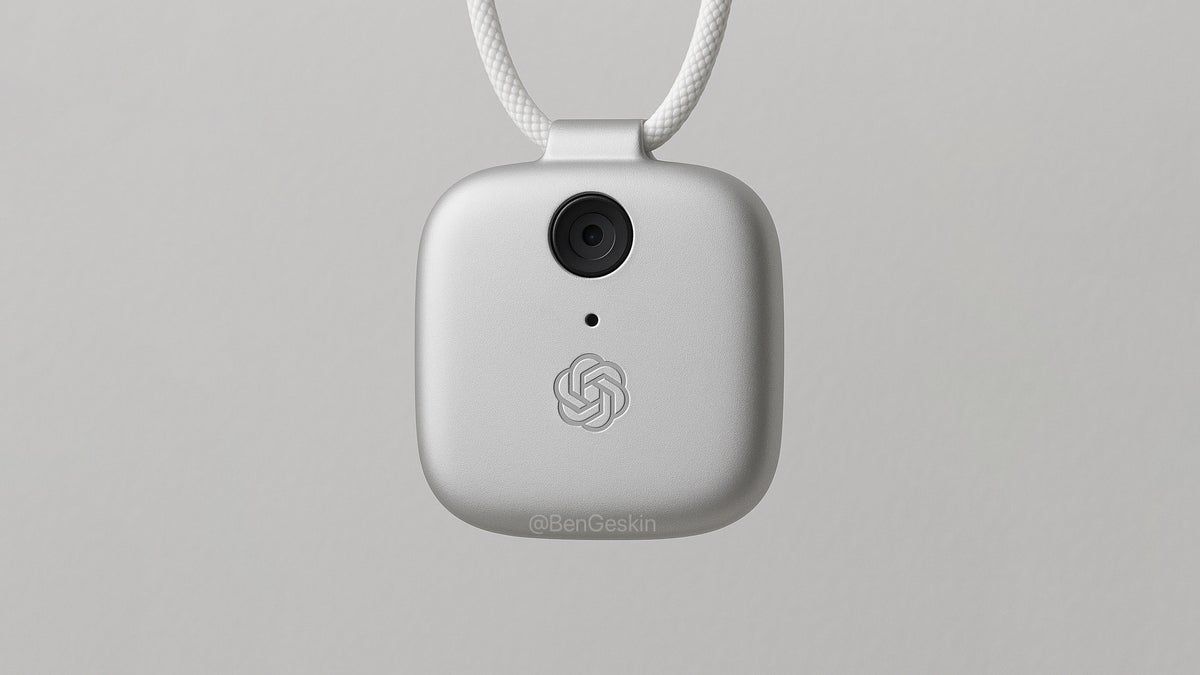
Following initial descriptions, various unofficial concept designs have begun to surface (such as Ben Geskin's on X), providing speculative visual interpretations of the potential device. While these renderings offer an early glimpse into possible aesthetic directions, it's crucial to remember they are artistic impressions and not official representations. Given Jony Ive's renowned design philosophy and leadership in this venture, there's considerable anticipation that the final hardware will embody groundbreaking innovation, setting new benchmarks in product design.
The Broader Market Impact of AI Advancements
The influence of AI is extending far beyond hardware development and into financial markets. The recent launch of Anthropic's Claude Code Security tool caused an immediate and significant selloff of cybersecurity stocks. Investors reacted to the possibility that AI could automate vulnerability detection, potentially disrupting the business models of established security firms like CrowdStrike and Okta.
Sam Altman recently addressed growing concerns, dismissing claims about excessive water usage as "totally fake" and calling out some companies for "AI washing" - blaming layoffs on AI that were already planned.
At the same time, the immense power requirements of AI are creating new industries. The strain on traditional power grids has led some data center operators to use repurposed jet turbines as a stopgap power source. This highlights the critical infrastructure challenges that must be solved to support the industry's rapid growth. OpenAI is also addressing its public image by testing ads in ChatGPT for free-tier users, a move to generate revenue from its massive user base.
AI's Role in the Workforce and Business
The conversation around AI and employment continues to evolve. OpenAI CEO Sam Altman commented on the trend of AI washing layoffs, acknowledging that some companies are using AI as a convenient excuse for pre-planned workforce reductions. However, he also warned that real, AI-driven job displacement is on the horizon.
Data from Anthropic provides a glimpse into current AI usage, revealing that software engineering accounts for nearly 50% of all AI agent activity. This heavy concentration in one sector suggests that while adoption is growing, it remains unevenly distributed across industries like healthcare, legal, and finance, each represent less than 5% of usage. The future of coding agents themselves is also in question, with some experts predicting the current generation will soon be seen as primitive as the focus shifts from agent capability to better codebase organization.