


The Arrival of a Titan: What is Seedance 2.0 AI?
To understand the magnitude of the Seedance controversy, one must first understand the technology behind it. Released by Chinese tech giant ByteDance (the parent company of TikTok), Seedance 2.0 is an advanced generative video model designed to turn simple text prompts and reference images into fluid, highly realistic, and physically accurate video sequences.
While earlier models proved that AI could generate visually stunning but often structurally flawed clips, Seedance 2.0 pushed the industry into what experts are calling the "practical era" of AI video creation tools.
What made Seedance 2.0 structurally different upon its reveal?
Cinematic Visual Quality: The model sustains visual fidelity without rapid degradation, meaning the lighting, textures, and details remain consistent across its generations.
Audio-Video Joint Modeling: Seedance 2.0 generates synchronized video and audio simultaneously, bypassing the need for secondary dubbing tools. Other tools like Kling AI are also capable of this, but Seedance 2.0 does the job at a very professional level.
Flexible Shot Composition: Creators can dictate specific camera movements - such as pushing, pulling, panning, and dollying - with remarkable adherence to the prompt.
The Seedance Controversy: Why Hollywood Declared War
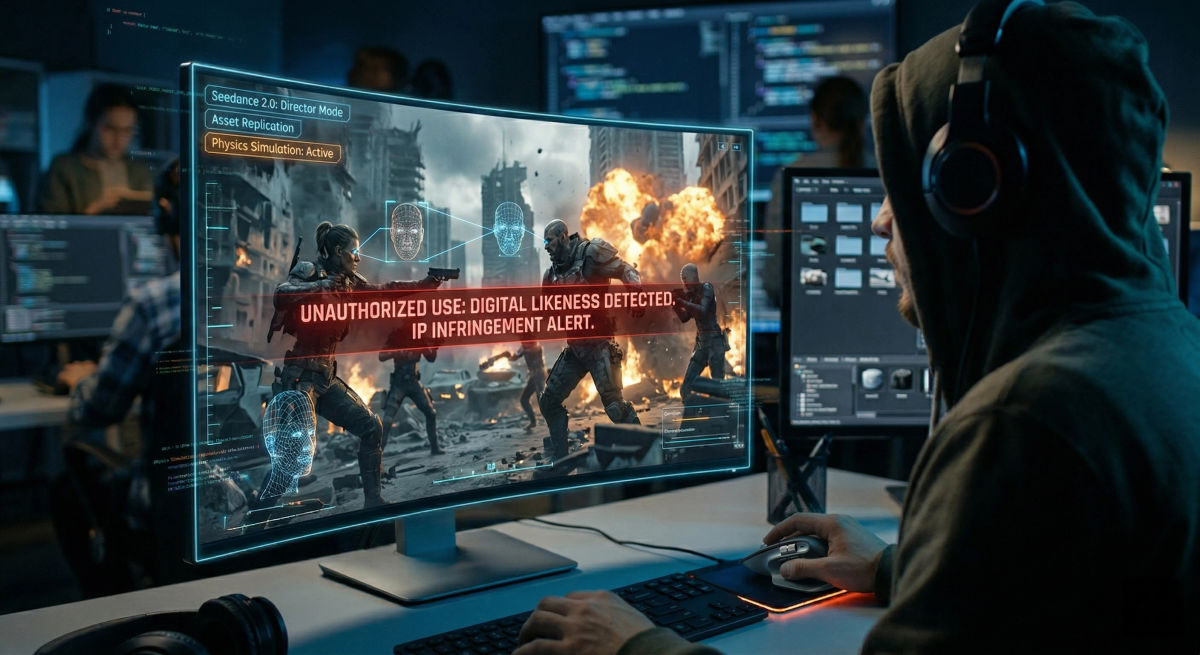
The technological triumph of Seedance 2.0 AI was quickly overshadowed by its immediate application by early users. Within 24 hours of the early previews going live, social media platforms were flooded with viral, hyper-realistic videos featuring unauthorized, blockbuster-style battles and simulated cinematic fights with digital replicas of A-list actors. From Brad Pitt and Tom Cruise fighting on a rooftop and Bruce Lee vs. a cat, to alternative endings of blockbuster movies, such as the Titanic, we've seen amazing works from AI video generator enthusiasts.
While these videos were an absolute blast to watch and enjoy, the entertainment industry's response was swift, unified, and legally aggressive. The Seedance copyright issues became front-page news globally.
The Cease-and-Desist Wave
Disney and the Motion Picture Association (MPA) fired the first major shots, demanding ByteDance halt its activities. They accused the ByteDance AI video generator of training on and replicating U.S. copyrighted works on a massive scale. Furthermore, the actors' union, SAG-AFTRA, strongly condemned the platform for the unauthorized replication of actors' voices and likenesses amidst the growing Hollywood AI backlash.
Cancellation Rumors vs. Reality: Where is Seedance Now?
Amidst the backlash, rumors swirled that ByteDance was pulling the plug on Seedance entirely. However, the cancellation was largely a myth. ByteDance did not shut down the model; they initiated a tactical retreat to implement stricter IP safeguards and content filters.
At the timing of writing this article, Seedance 2.0 AI is available, but in a highly controlled, regional manner through the Jimeng AI Beta. Jimeng AI is a video platform owned by ByteDance, primarily focused on the Chinese market. Select users and developers have been granted quota-based access to test the model while ByteDance refines its commercial viability and legal compliance.
The "Practical Era": Why Kling 3.0 is Winning While the West Lags
Because Seedance 2.0 remains heavily restricted and gated behind the Jimeng AI Beta, international creators have desperately sought out the next best thing. Currently, the undisputed champion filling this void is Kling 3.0.



Developed by Kuaishou, Kling 3.0 has capitalized perfectly on the Seedance controversy. Offering a highly accessible global platform, Kling 3.0 delivers exceptional physics, profound prompt adherence, and stunning realism that genuinely rivals - and in some use-cases, surpasses - what was promised by Seedance. For creators needing high-quality AI video today, Kling 3.0 is universally considered the best alternative on the market.
Interestingly, the Western pioneers of generative AI are currently struggling to keep pace in this specific arena of AI video creation tools.
Sora (OpenAI): While Sora initially blew minds with its early demos, its public availability and practical, day-to-day usability have fallen short. Compared to the cinematic precision and rapid iteration available in Kling 3.0 and Seedance 2.0, Sora currently feels more like a locked-down tech demo than a daily driver for creators. Not long ago, OpenAI decided to completely shut Sora down, realizing they have been left behind and deciding to focus resources elsewhere.
Veo (Google): Google's Veo offers impressive native audio generation and solid prompt adherence, but its output often lacks the raw cinematic grit and dynamic camera control that the Chinese models (Kling and Seedance) have mastered.
Below is a breakdown of the current competitive landscape:
Feature / Model | Seedance 2.0 (ByteDance) | Sora (OpenAI) | Veo (Google) | |
|---|---|---|---|---|
Current Status | Restricted (Jimeng Beta) | Fully Available / Dominant | Project Shut Down | Limited Availability |
Cinematic Quality | Exceptional | Exceptional | High, but sterile | Moderate to High |
Camera Control | Director-level precision | Highly dynamic | Scene-dependent | Smooth but limited |
Best Use Case | Waiting for global release | Immediate, daily production | Concept showcases | Brand-safe experiments |
What is Expected in the Future of Generative AI?
The fallout from the Seedance saga provides a clear window into the future of generative AI.
First, we are witnessing a clear Eastern Dominance in AI video creation tools. Models like Kling 3.0 and Seedance 2.0 are proving that Chinese tech firms are currently outpacing Western giants in bringing practical, high-fidelity video generation directly to consumers.
Second, the Seedance copyright issues guarantee that the future will rely on licensed AI models. To survive international markets, these tools will eventually need to forge multi-million-dollar deals with studios, offering premium tiers where creators can legally generate content using official IP.
Closing Thoughts
The Seedance saga is a defining chapter in modern tech history. What began as a miraculous technological leap transformed into a battlefield over copyright law and artistic integrity. While the Seedance copyright issues forced ByteDance to retreat into the Jimeng AI Beta, competitors like Kling 3.0 have proven that the demand for this technology is insatiable. The genie is irrevocably out of the bottle, and as Western tools scramble to catch up, the global landscape of visual storytelling will never be the same.


